Student West Virginia School of Osteopathic Medicine Mount Crawford, Virginia, United States
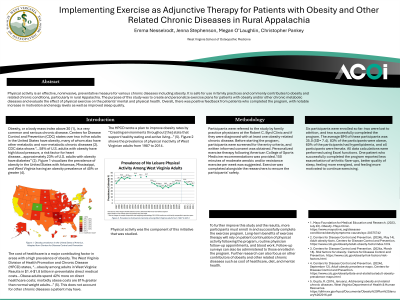
Introduction/Background: Obesity, or a body mass index above 30, is a very common and serious chronic disease. Centers for Disease Control and Prevention (CDC) states over two in five adults in the United States have obesity, many of whom also have other metabolic and non-metabolic chronic diseases. CDC data shows “…58% of U.S. adults with obesity have high blood pressure, a risk factor for heart disease…approximately 23% of U.S. adults with obesity have diabetes." CDC data shows that West Virginia has an obesity prevalence of 40% or greater and a significant percentage of physical inactivity across the state. Physical activity is an effective, noninvasive, preventative measure for various chronic diseases including obesity. It is safe for use in family practices and is the focus of this study.
Methods: Participants were referred to the study by family practice physicians at the Robert C. Byrd Clinic and if they were diagnosed with at least one obesity-related chronic disease. Before starting the program, participants were screened for the entry criteria, and written informed consent was obtained. Personalized exercise therapy following American College of Sports Medicine recommendations was provided. 150 minutes of moderate aerobic and/or resistance exercise per week was suggested. Exercise was completed alongside the researchers to ensure the participants’ safety.
Results/Discussion: Six participants were enrolled so far: two were lost to attrition, and one successful completion. The average BMI of these participants was 35.0 (SD= 7.4). 83% of the participants were obese, 60% of the participants had hyperlipidemia, and all participants were female. All data calculations were performed using Excel functions.
Conclusions: To further improve this study and the results, more participants must enroll in and successfully complete the exercise program. Long-term benefits of exercise therapy will rely on patient continuation of physical activity following the program, routine physician follow-up appointments, and blood work.