Internal Medicine St Mary Medical Center Somerset, New Jersey, United States
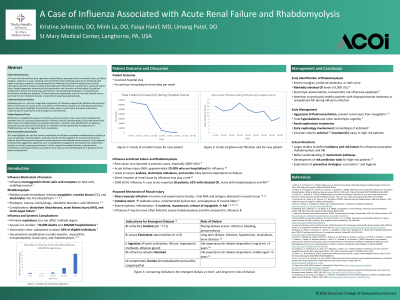
Clinical Scenario or Case: A 47-year-old male without prior significant medical history presented with a one-week history of diffuse myalgias, weakness, nausea, vomiting, and intermittent fever. He tested positive for influenza B at another hospital prior to arrival. Laboratory evaluation revealed creatine kinase (CK) level of 664,000 U/L, transaminitis, and acute kidney injury (AKI). Despite aggressive intravenous fluid resuscitation and correction of electrolytes, the patient progressed to anuria and worsening renal function, necessitating hemodialysis. A comprehensive autoimmune workup was negative. CK levels improved substantially over the nine-day hospital course, but renal function remained severely compromised, requiring ongoing dialysis.
Evidence/Literature Review: Rhabdomyolysis is a rare but recognized complication of influenza supported by literature that documents direct viral invasion of muscle tissue and systemic inflammatory responses as underlying mechanisms. Several case reports and series highlight its potential to cause severe muscle injury and acute renal failure.
Unique Aspects of Case: While there is established evidence of influenza-induced myositis, there seems to be relatively few reported cases of it compared with other causes of rhabdomyolysis. Early identification of influenza-induced rhabdomyolysis and renal failure is important because it drives appropriate management with aggressive fluid resuscitation and repletion of electrolytes.
Recommendations/Conclusions: This case highlights the rare but severe complication of influenza-associated rhabdomyolysis resulting in acute renal failure that required dialysis. Clinicians should maintain vigilance for muscle involvement in patients with influenza presenting with marked weakness and elevated muscle enzymes. Early diagnosis combined with aggressive supportive care may be critical to improve patient outcomes. Further research is needed to better understand the mechanisms underlying influenza-associated muscle injury and to identify patients at greatest risk for severe complications.