Internal Medicine NSU KPCOM - Clearwater Orlando, Florida, United States
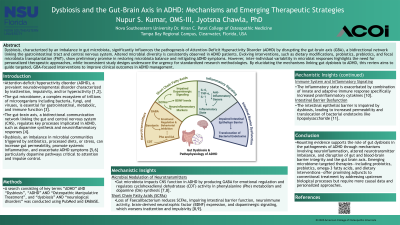
Introduction/Background: Dysbiosis, characterized by an imbalance in gut microbiota, significantly influences the pathogenesis of Attention-Deficit Hyperactivity Disorder (ADHD) by disrupting the gut-brain axis (GBA), a bidirectional network linking the gastrointestinal tract and central nervous system.
Methods: This review synthesizes recent evidence on how dysbiosis drives neuroinflammation, increases gut permeability, and alters neurotransmitter systems (e.g., serotonin, dopamine, glutamate), exacerbating ADHD symptoms through impaired neuronal health and immune dysregulation.
Results/Discussion: Reduced microbial diversity is consistently observed in ADHD patients. Emerging interventions, such as dietary modifications, probiotics, prebiotics, and fecal microbiota transplantation (FMT), show preliminary promise in restoring microbiota balance and mitigating ADHD symptoms. However, inter-individual variability in microbial responses highlights the need for personalized therapeutic approaches, while inconsistent study designs underscore the urgency for standardized research methodologies.
Conclusions: By elucidating the mechanisms linking gut dysbiosis to ADHD, this review aims to guide targeted, GBA-focused interventions to improve clinical outcomes in ADHD management.