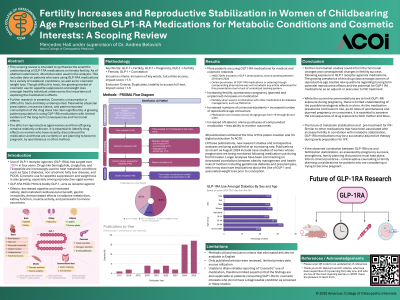
(66-STU) Fertility increases and reproductive stabilization in women of childbearing age prescribed GLP1-RA medications for metabolic conditions and cosmetic interests: a scoping review
Student Idaho College of Osteopathic Medicine Meridian, Idaho, United States
Introduction/Background: Use of GLP-1 receptor agonists (GLP-1 RAs) has surged over 700% in four years. Drugs like semaglutide, liraglutide, and tirzepatide are increasingly used to treat metabolic conditions such as Type 2 diabetes, non-alcoholic fatty liver disease, and PCOS. Cosmetic use for appetite suppression and weight loss is also growing, especially among reproductive-aged women. Amongst this age group, it is essential to understand the hormonal changes and reproductive consequences associated with the drug class as it relates to mother and offspring. This literature review is intended to identify the short and long-term hormonal changes and fertility outcomes that GLP-1 RA induce, from the existing literature, to inform patients and prescribers.
Methods: Scoping review of literature on fertility changes and pregnancy success of women using GLP-1RA medications, using data bases such as Biomed and NIH. Key terms: GLP-1 RA + Fertility, GLP-1 + Pregnancy, GLP-1 + Fertility + Female.
Results/Discussion: From 30 identified articles, 5 were excluded because they were specific to sperm mobility or testosterone changes in males. Based on the existing literature, there are controversial and variable findings of the potential teratogenic effects of GLP-1 exposure in utero, according to animal studies. Similarly, there were inconsistent findings of the effect on pregnancy success, as assessed by in-vitro fertilization, oocyte retrieval, and spontaneous pregnancy. While some research has found that there was increased in-vitro and spontaneous pregnancy success when GLP1-RAs were taken in combination with other diabetes medications, other studies found insufficient evidence.
Conclusions: Further mammalian studies could inform the hormonal changes and consequential changes in fertility success following exposure to GLP-1 receptor agonist medications. The growing prevalence of this drug class amongst women of reproductive age creates new questions regarding its long term potential reproductive effects and the potential for GLP-1 RA medications as an adjunct or precursor to IVF treatment.