Osteopathic Medical Student Nova Southeastern University KPCOM Coral Springs, Florida, United States
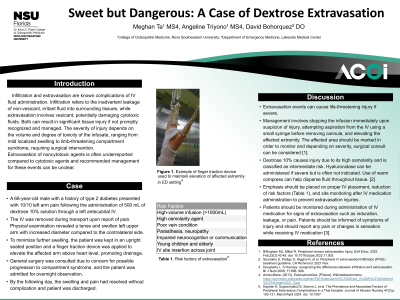
Clinical Scenario or Case: A 68-year-old male with a history of type 2 diabetes presented to the emergency department with left arm pain following the administration of 500 mL of dextrose 10% solution through a left antecubital IV. The infusion had been initiated by emergency medical services in response to a hypoglycemic episode. During transport, the patient reported pain at the IV site, prompting its removal. Upon arrival, he described the pain as 10/10 in intensity. Physical examination revealed a tense and swollen left upper arm with increased diameter compared to the contralateral side. To minimize further swelling, the patient was kept in an upright seated position and a finger traction device was applied to elevate the affected arm above heart level, promoting venous drainage. General surgery was consulted due to concern for possible progression to compartment syndrome, and the patient was admitted for overnight observation. By the following day, the swelling and pain had resolved without complication.
Evidence/Literature Review: Infiltration and extravasation are known complications of IV fluid administration. Infiltration refers to the inadvertent leakage of nonvesicant (irritant) fluid into surrounding tissues, while extravasation involves vesicant (potentially damaging or cytotoxic) fluids. Both can result in significant tissue injury if not promptly recognized and managed. The severity of injury depends on the volume and degree of toxicity of the fluid, ranging from mild localized swelling to limb-threatening compartment syndrome, requiring surgical intervention.
Unique Aspects of Case: Extravasation of noncytotoxic agents is often underreported compared to cytotoxic agents and recommended management for these events can be unclear. This case of extravasation injury was treated with the use of elevation, utilizing gravity to facilitate healing.
Recommendations/Conclusions: Extravasation of medications can cause life-threatening injury. Emphasis should be placed on proper IV placement, consideration of risk factors, and site monitoring after IV medication administration to prevent extravasation injuries.