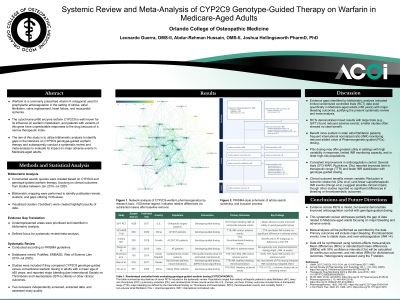
Introduction/Background: Warfarin is a common anticoagulant utilized in the prophylaxis of thromboembolism, in the setting of stroke, atrial fibrillation, valve replacement, heart failure, and myocardial ischemia. The most well-known gene influencing warfarin metabolism is CYP2C9, a member of the cytochrome P450 family. Pharmacogenetics-guided (PGx) warfarin dosing has been developed to account for patients' genetic variations. The narrow therapeutic range and significant interpatient variability in dose requirements make the anticoagulant response to warfarin derivatives highly unpredictable under conventional means. The aim of this study is to systematically review and meta-analyze the existing literature to evaluate the impact of CYP2C9 genotype-guided warfarin therapy on major adverse events i.e. major bleeding events.
Methods: Preferred Reporting Items for Systematic reviews and Meta-Analyses reporting guidelines will be utilized. Pubmed, EMBASE, and Web of Science databases will be searched from January 2010 through July 2025. Randomized controlled trials that compare CYP2C9 genotype-guided therapy to conventional warfarin dosing and report major bleeding events as defined by the International Society on Thrombosis and Haemostasis (ISTH) and clinical outcomes in participants 65 years of age or older will be included . Two reviewers will independently screen, extract data, and assess quality. Meta-analyses will be performed as permitted by the data.
Results/Discussion: Primary outcomes will include major bleeding, thromboembolic events, time to stable dose, and over-anticoagulation (INR >4). Data will be synthesized using random-effects meta-analysis. Mean differences (MDs) or standardized mean differences (SMDs) with 95% confidence intervals (CIs) will be calculated for continuous outcomes, and risk ratios (RRs) for dichotomous outcomes. Heterogeneity assessed using the I² statistic. All analyses are to be performed using R.
Conclusions: The study will allow us to understand the significance of this gene in clinical practice, while also observing if dose-dependent adverse effects are present within older patients with more risk factors.