Internal Medicine Ohio University Heritage College of Osteopathic Medicine Dublin, Ohio, United States
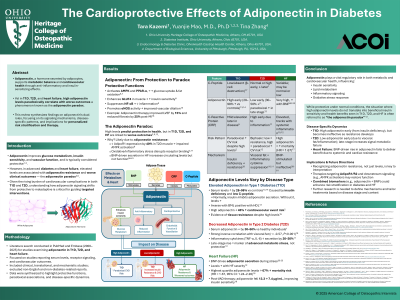
Introduction/Background: Adiponectin, a hormone secreted by adipocytes, maintains metabolic balance and supports cardiovascular health. Although it improves insulin sensitivity and vascular function, paradoxical associations between high adiponectin levels and increased cardiovascular mortality—termed the "adiponectin paradox"—complicate its clinical interpretation. This study reviews adiponectin’s cardioprotective effects in type 1 and type 2 diabetes and explores the potential mechanisms driving the paradox, particularly in diabetic cardiomyopathy and heart failure.
Methods: A literature review was conducted using PubMed, focusing on studies published in the past 15 years. Keywords included "adiponectin," "diabetes mellitus," "cardiovascular outcomes," "complications," and "congestive heart failure." Articles evaluating adiponectin’s cardiovascular effects across diabetes subtypes and heart failure were included, with emphasis on mechanisms underlying paradoxical outcomes.
Results/Discussion: The review confirmed that adiponectin promotes cardiovascular health by improving insulin sensitivity, reducing oxidative stress, suppressing inflammation, and enhancing endothelial function. However, the adiponectin paradox complicates clinical interpretation: elevated adiponectin levels are paradoxically associated with increased cardiovascular mortality, especially in chronic heart failure. Key contributors include insulin deficiency in type 1 diabetes, adipose dysfunction in type 2 diabetes, chronic inflammation, oxidative stress, and structural impairment of AdipoR1 and AdipoR2 receptors. In heart failure, elevated brain natriuretic peptide (BNP) stimulates adiponectin production, but concurrent adiponectin resistance blunts protective effects, driving maladaptive cardiac remodeling, ventricular dilation, and worsening outcomes. Sex hormones and aging further modify adiponectin signaling, ultimately transforming adiponectin from a protective factor into a biomarker of disease severity.
Conclusions: Targeting adiponectin resistance and restoring receptor signaling offer promising strategies to improve cardiovascular outcomes in patients with diabetes. Although major advances have clarified the role of adiponectin in cardiovascular health, key mechanistic gaps remain, particularly regarding the pathways driving adiponectin resistance and paradoxical effects. Focused research is still needed to refine therapeutic strategies that enhance adiponectin’s protective actions without amplifying maladaptive responses, especially in diabetic cardiomyopathy and heart failure.