Student NSU-KPCOM: Tampa Bay Oviedo, Florida, United States
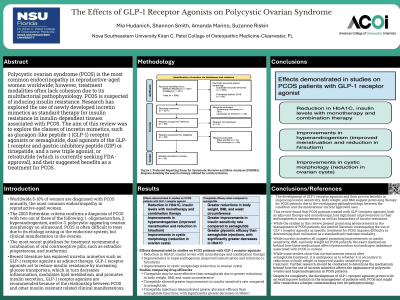
Introduction/Background: Treatment modalities for polycystic ovarian syndrome (PCOS) often lack cohesion due to its multifactorial pathophysiology. PCOS is suspected of inducing insulin resistance. Research has explored the use of newly developed incretin mimetics as standard therapy for insulin resistance in insulin-dependent tissues associated with PCOS. The aim of this review was to explore the classes of incretin mimetics, such as glucagon-like peptide-1 (GLP-1) receptor agonists (semaglutide), dual GLP-1/gastric inhibitory peptide (GIP) agonists (tirzepatide) and a new triple agonist (retratrutide) and their suggested benefits as a treatment for PCOS.
Methods: A literature review was conducted using EBSCO Medline and PubMed following the PRISMA guidelines. A total of 22 articles were included in this review. Exclusion criteria included articles written prior to 2019, case studies, case reports, and those otherwise out of scope for the purpose of this review.
Results/Discussion: All three classes of incretin mimetics showed significant improvement in weight loss and insulin sensitivity when compared to traditional pharmacologic management with metformin and oral contraceptive pills. The added upregulation of GIP in dual-acting and triple-acting agonists resulted in greater reductions in weight loss and insulin sensitivity when compared to medications that acted at the GLP-1 receptor alone. Some research demonstrated symptom improvements specific to PCOS presentation, such as dysmenorrhea and the classic dysmorphic ovarian morphology.
Conclusions: Analysis of the available literature for the use of incretin mimetics in conjunction with traditional metformin therapy suggests that the use of these medications may be as an effective adjuvant treatment for PCOS patients concerned with reducing body weight, BMI, and waist circumference. . Further research is warranted to determine the exact mechanism behind how incretin mimetics may improve the hormonal dysregulation in PCOS patients and how to best use these medications in conjunction with current standard of care treatments.