Medical Student Nova Southeastern University KPCOM Orlando, Florida, United States
Introduction/Background: Type 2 diabetes mellitus (T2DM) poses a major public health challenge, particularly in communities facing longstanding social, geographic, and systemic barriers to care. American Indian and Alaska Native (AI/AN) populations experience disproportionate impacts from T2DM, prompting growing efforts to design management strategies that are both clinically effective and culturally responsive.
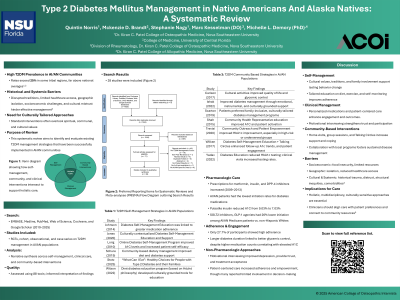
Methods: A systematic review of literature published between June 2010 and June 2025 was conducted across PubMed, EMBASE, Web of Science, OVID Medline, Cochrane Library, and Google Scholar. Studies were eligible if they focused on T2DM management in AI/AN populations. Data was extracted from 28 studies and categorized into three domains: self-management, clinical management, and community-based interventions.
Results/Discussion: Self-management strategies were most effective when culturally tailored, incorporating Native values, language, and community/family support. Programs using traditional teachings (e.g., the Diné concept of Hózhó) and tools like the Diabetes Plate showed improved glycemic control and self-efficacy. Clinical management studies revealed inconsistent use of guideline-recommended therapies; AI/AN individuals had lower initiation rates of SGLT2 inhibitors and GLP-1 agonists despite high obesity and cardiovascular risk. While metformin remains a common first-line agent, adherence varied widely and was influenced by medication burden, provider communication, and insurance status. Community-based interventions, particularly those utilizing Community Health Representatives or Talking Circles, demonstrated positive trends in A1C and engagement by fostering spiritual connection and culturally relevant care.
Conclusions: Effective management of T2DM in AI/AN communities requires integrated, culturally responsive approaches that address clinical, behavioral, and social determinants of health. Programs grounded in Indigenous traditions and community support structures enhance self-management, improve adherence, and promote sustainable outcomes. However, access disparities, historical trauma, and geographic isolation remain major barriers. Future interventions should prioritize culturally congruent, team-based models of care and equitable access to pharmacologic advancements.