Medical Student Orlando College of Osteopathic Medicine Winter Garden, Florida, United States
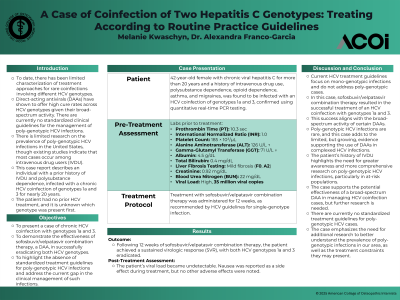
Clinical Scenario or Case: A 42-year-old female with a medical history of chronic viral hepatitis C (HCV) for more than 20 years and intravenous drug use was found to be infected with HCV coinfection of genotypes 1a and 3. Labs before treatment revealed a viral load of 35 million viral copies. Liver fibrosis testing revealed mild stages of fibrosis (F0 and A2) and elevated liver enzymes. The patient was treated with a 12-week course of sofosbuvir/velpatasvir combination therapy, in accordance with standard guidelines for HCV monoinfection. The patient achieved sustained virologic response (SVR), with both HCV genotypes eradicated.
Evidence/Literature Review: While HCV is known for its genetic diversity, coinfection with multiple genotypes within the same host is rare. More uncommon is the natural recombination of viral genomes within a single host cell. Coinfection with distinct HCV genotypes remains poorly characterized in the literature, particularly with respect to treatment outcomes. Existing studies suggest that such infections occur most frequently among individuals who inject drugs (IVDU), though data on prevalence in the United States remain limited.
Unique Aspects of Case: Poly-genotypic HCV infections are rare, and this case highlights the importance of further studies on their prevalence and optimal treatment approaches. The patient’s history of long-term untreated infection, IVDU, and polysubstance dependence further highlights the challenges of managing HCV in vulnerable populations. Despite these complexities, the patient tolerated treatment well, with minimal side effects, and achieved complete viral clearance.
Recommendations/Conclusions: This case report provides insight into the treatment of rare poly-genotypic HCV infections using sofosbuvir/velpatasvir combination therapy. It emphasizes the need for additional research to better understand the prevalence of poly-genotypic infections. A key clinical challenge is the lack of established guidelines, which may contribute to provider uncertainty in managing multi-genotype infections. This case highlights the importance of developing evidence-based recommendations to support clinical decision-making in the treatment of HCV coinfections.