Internal Medicine Resident, PGY-2 St. Luke's University Health Network Bethlehem, Pennsylvania, United States
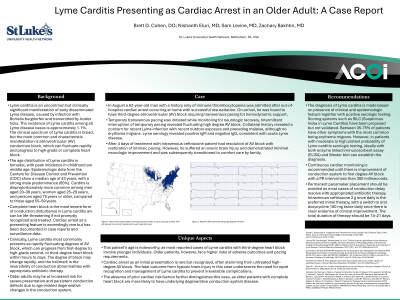
Clinical Scenario or Case: A 62-year-old man with a history only of immune thrombocytopenia was admitted after out-of-hospital cardiac arrest with successful resuscitation. On arrival, he was found to have third-degree atrioventricular (AV) block requiring transvenous pacing for hemodynamic support. Lyme serology revealed positive IgM and negative IgG, consistent with acute Lyme disease. Despite stabilization and treatment with ceftriaxone with eventual restoration of intrinsic pacing, he suffered an anoxic brain injury due to prolonged downtime and was transitioned to comfort care.
Evidence/Literature Review: Lyme carditis, an early disseminated manifestation of Borrelia burgdorferi infection, typically occurs within days to weeks of infection, most often in young and middle-aged men. The Infectious Diseases Society of America and related societies note that high-degree AV block is the most common cardiac manifestation, often with rapidly fluctuating conduction abnormalities. Temporary pacing may be needed for instability, though permanent pacing is rarely required, as heart block often resolves with antibiotics. While mortality from Lyme carditis is low, delayed recognition can result in severe outcomes, including sudden cardiac arrest.
Unique Aspects of Case: This patient’s age is noteworthy, as most reported cases of Lyme carditis with third-degree heart block involve younger individuals. Older patients, however, face higher risks of adverse outcomes and pacing requirements. Cardiac arrest as an initial presentation is rare but recognized, often stemming from untreated high-degree AV block. The fatal outcome from hypoxic brain injury in this case underscores the need for rapid recognition and management of Lyme carditis to prevent irreversible complications.
Recommendations/Conclusions: Lyme carditis should be considered in any patient with new high-degree AV block, particularly in endemic areas. Prompt diagnosis, antibiotics, and temporary pacing are crucial to reduce morbidity and mortality. This case highlights potentially fatal outcomes in older adults with Lyme carditis, reinforcing the importance of early intervention.