Internal medicine Canyon vista medical center-Midwestern University Sierra Vista, Arizona, United States
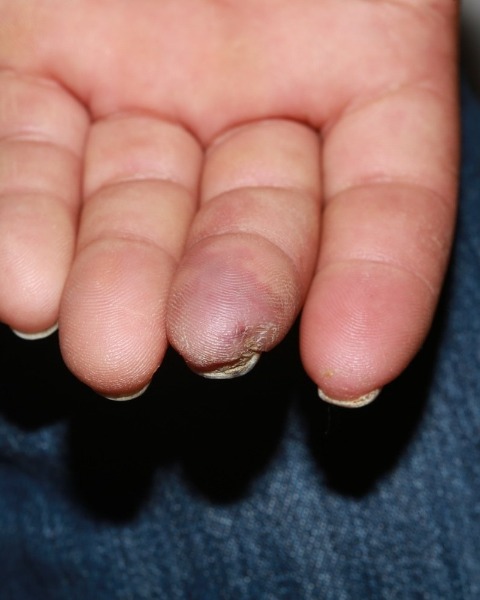
Clinical Scenario or Case: A 74-year-old male presented with LE rash initially treated as cellulitis. Due to further concerns for vasculitis, screening tests for Hep C and later HIV were performed; however, they turned out to be false positives. Subsequently, the patient developed new digital cyanosis with ulcerations. Autoimmune testing showed positive ANA and anticentromere antibodies, consistent with CREST syndrome.
Evidence/Literature Review: False-positive HIV tests, particularly with 4th-generation Ag/Ab combo assays, can occur in patients with autoimmune diseases, leading to significant clinical and psychosocial consequences. This is illustrated in "Severe Lupus Flare in Disguise”, a 30-year-old female with fatigue, oral thrush, and a positive HIV Ag/Ab test was later diagnosed with SLE after confirmatory PCR for HIV was negative and an elevated ANA titer was identified.
The underlying mechanism behind this is molecular mimicry, as described by Muta and Yamano. The P24 HIV antigen shares epitopes with autoimmune antibodies, resulting in false-positive HIV screening. Autoimmune diseases cause chronic immune activation and B-cell stimulation, leading to the production of nonspecific antibodies. These antibodies can also cross-react with HCV antigens in serological assays, resulting in false-positive HCV antibody testing.
Unique Aspects of Case: The distinctive feature of our case resides in the clinical ambiguity of the patient’s presentation, coupled with an initial workup that resulted in multiple false-positive findings. The differential diagnosis initially encompassed HCV vasculitis, limited scleroderma, and HIV. Subsequent confirmatory testing excluded two of these diagnoses. Thereby further supporting the concept of molecular mimicry in autoimmune disorders and its potential to interfere with HCV and HIV screening assays.
Recommendations/Conclusions: This case highlights the diagnostic challenges of CREST syndrome presenting with cellulitis-like features and false-positive HIV/HCV tests, emphasizing the need for thorough investigation and early recognition to ensure appropriate treatment. We recommend maintaining a broad differential, considering autoimmune testing in patients with atypical presentations, and confirming infectious disease screenings to avoid misdiagnosis.